A Life Incomplete

Notes on things past, present, and future from somewhere in Japan (and perhaps elsewhere)

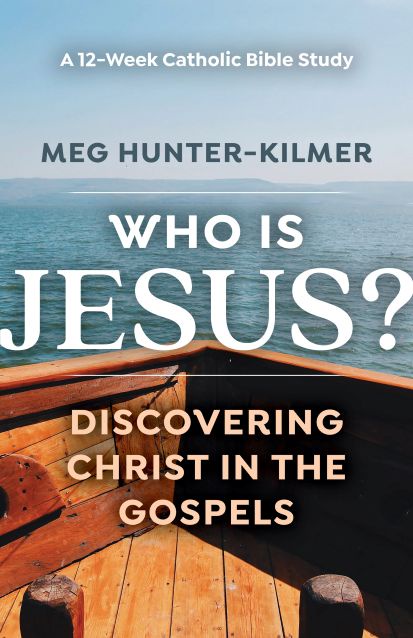
When I saw author Meg Hunter-Kilmer say on Facebook that she was publishing a new book, Who Is Jesus: Discovering Christ in the Gospels, I really wanted a copy but wasn't sure it would come out in Japan, where I live. So I reached out to her for a review copy in exchange for an honest review. She quickly responded and got me a copy. So, this is a review based on that free copy.

 I think I first found out about the author on Twitter. She has two theology degrees from Notre Dame. She now works there in the campus ministry after years of being on the road as a “Hobo for Christ.” She does have a passion for Scripture, having read the Bible multiple times — the first time, as she states in the introduction to this book, when she was 13. Her passion for Jesus and Scripture comes through in her podcasts and talks, which I often have the pleasure of listening to.

 On the other hand, as a more stereotypical cradle Catholic, I haven't read the entire Bible on my own. I have own Bibles in multiple languages, translations, and formats. Of course, I have Fr. Mike Schmitz’s Bible in a Year podcast on my devices.  I even have Hunter-Kilmer's previously published book, A Year in the Word Catholic Bible Journal. Yet there is still something intimidating about reading it in one go – even if that one go is over one year.

This book, at less than 100 pages, is much less intimidating. It is meant to be used as a textbook for a Bible study group, though it works just as well as a solo study/prayer guide.

I went through it once when I first got it and then again today. As both a Catholic and a teacher, I really like it. 

Organized as a 12-week course, readers follow the life of Jesus through the Gospels, starting with the Annunciation and going through to Christ’s resurrection. Each week has three Scripture readings on the week's topic related to the life of Jesus, followed by a few short notes on the readings and some questions to help readers/participants think more deeply about the readings. Each section ends with a “praying with the word” section to help one further reflect on the reading. Her voice and passion that are so pronounced in her talks come through clearly in the notes and questions in these sections.

 I am also really impressed, as a lifelong teacher of English as a foreign language, with how the book is structured. First, in the introduction, Hunter-Kilmer sets out her expectations, which are that the reader should be ready to go at their own pace, to not feel intimidated, that God's word and love are for everyone and that no matter where you are or who you are you will find something new in it. She follows through on this thinking by how she has structured the discussion sections. She always starts out with the same question, asking readers/participants about how the reading affects them in a way that will eventually prime participants into thinking about Scripture more deeply while they are reading. The subsequent questions are obviously deeply informed by her own deep reading of Scripture and prayer. Each section ends with a space to help the reader/participant move into deeper thinking and prayer on what was discussed by writing down something concrete that moved them during their reading.

 My mom taught CCD at our local church, and although I became a teacher, I never really thought I would — or could — teach or lead any discussions related to the Church. I am a cradle Catholic and my journey isn’t really an intellectual one, but one made up of faith and experiences. I am not always open in sharing what I am thinking about that journey, as well. Yet, going through this book, I not only felt this was something I could use, but something I would like to use, something that got me thinking about how I could use it in a discussion group.

 In the end, after asking for a review copy thinking it wouldn't be available in Japan, it is actually available here on both Amazon Japan and Rakuten/Kobo. So maybe I will be able to use it someday. Highly recommended.
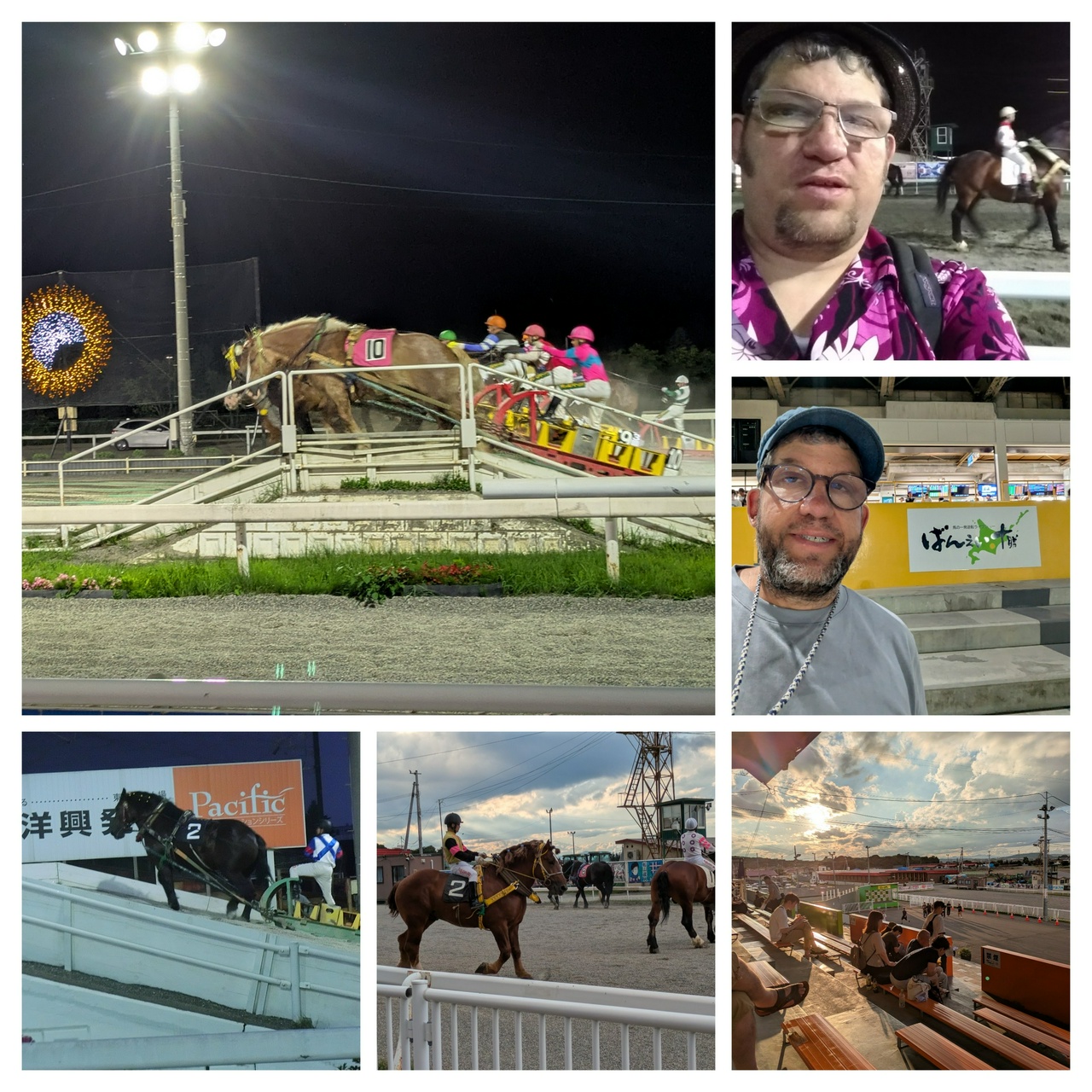
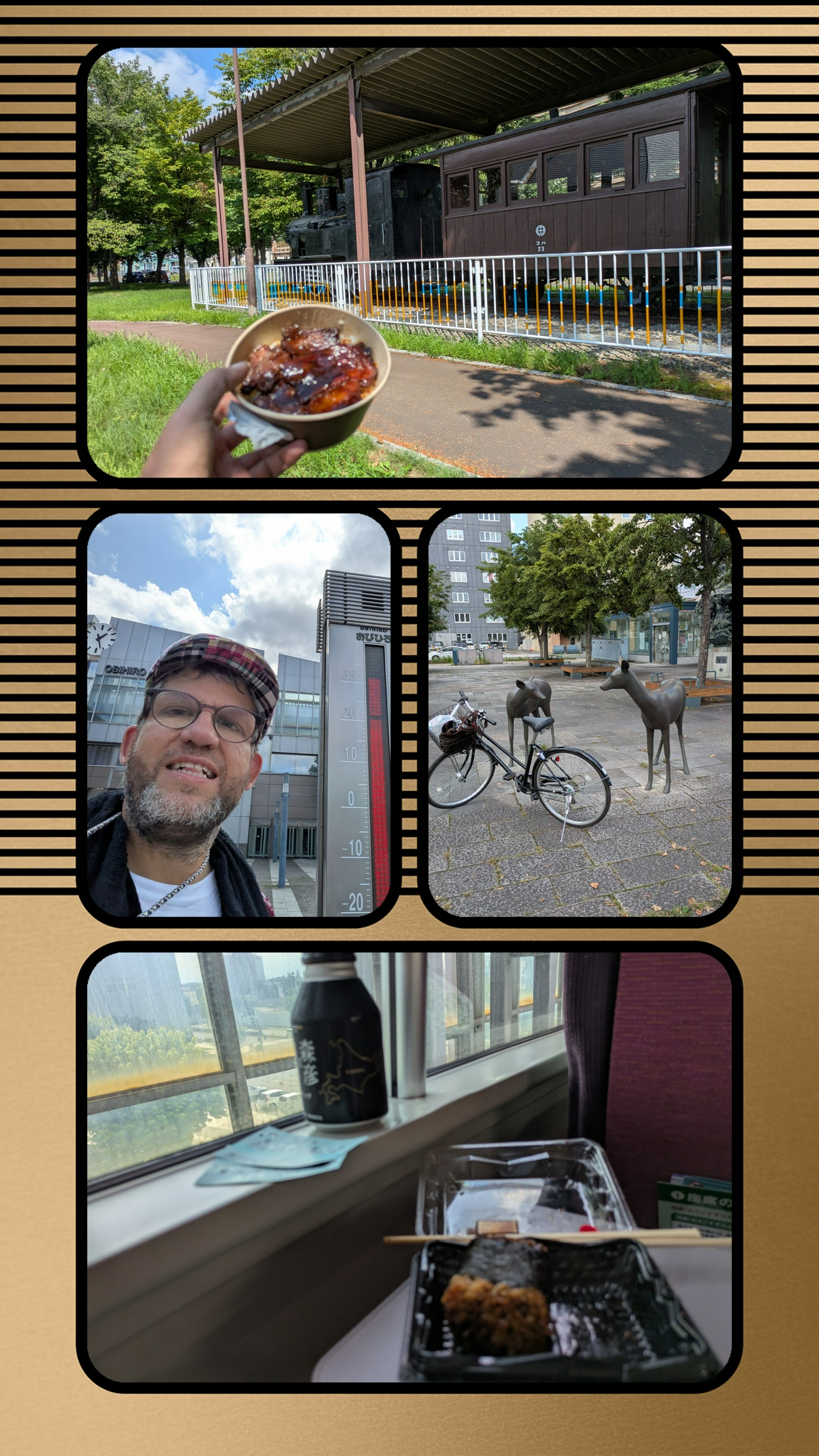
Obihiro has a few strikes against it for me. First, there are no Tora-san filming locations in the area. Second, it is difficult to get to by a local train. Third, it is difficult to get around without a car.

Even with all of that, I had visited it once before to watch the Banei horse races, where giant horses slowly pull a sled and a jockey down a straight. I found a hotel just down the street from the track and for three days all I did was watch the races. I spent a day watching the races again. They seemed a bit more popular than when I last visted. However, I was able to see a bit more of the city this time and liked what I saw.

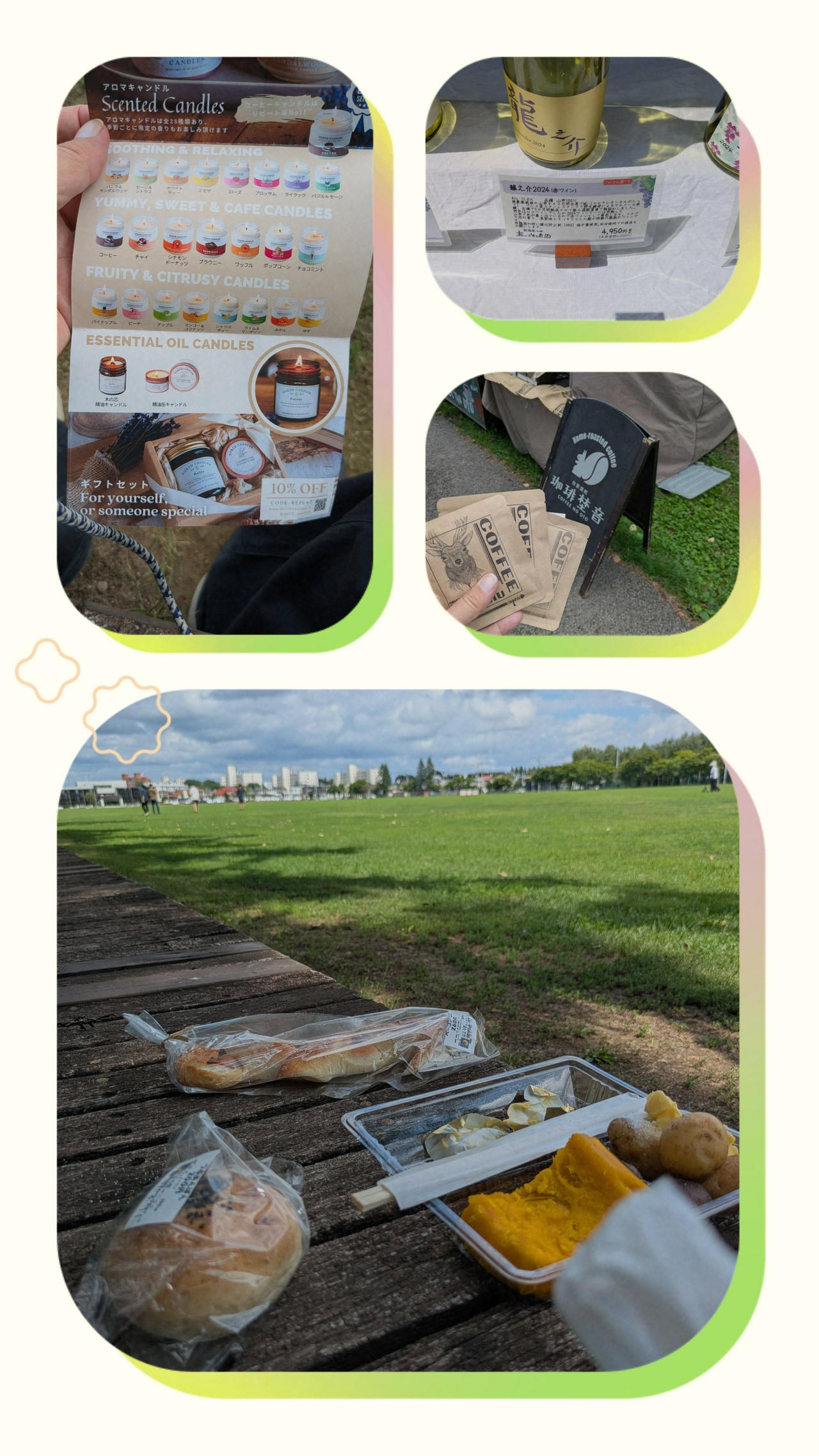
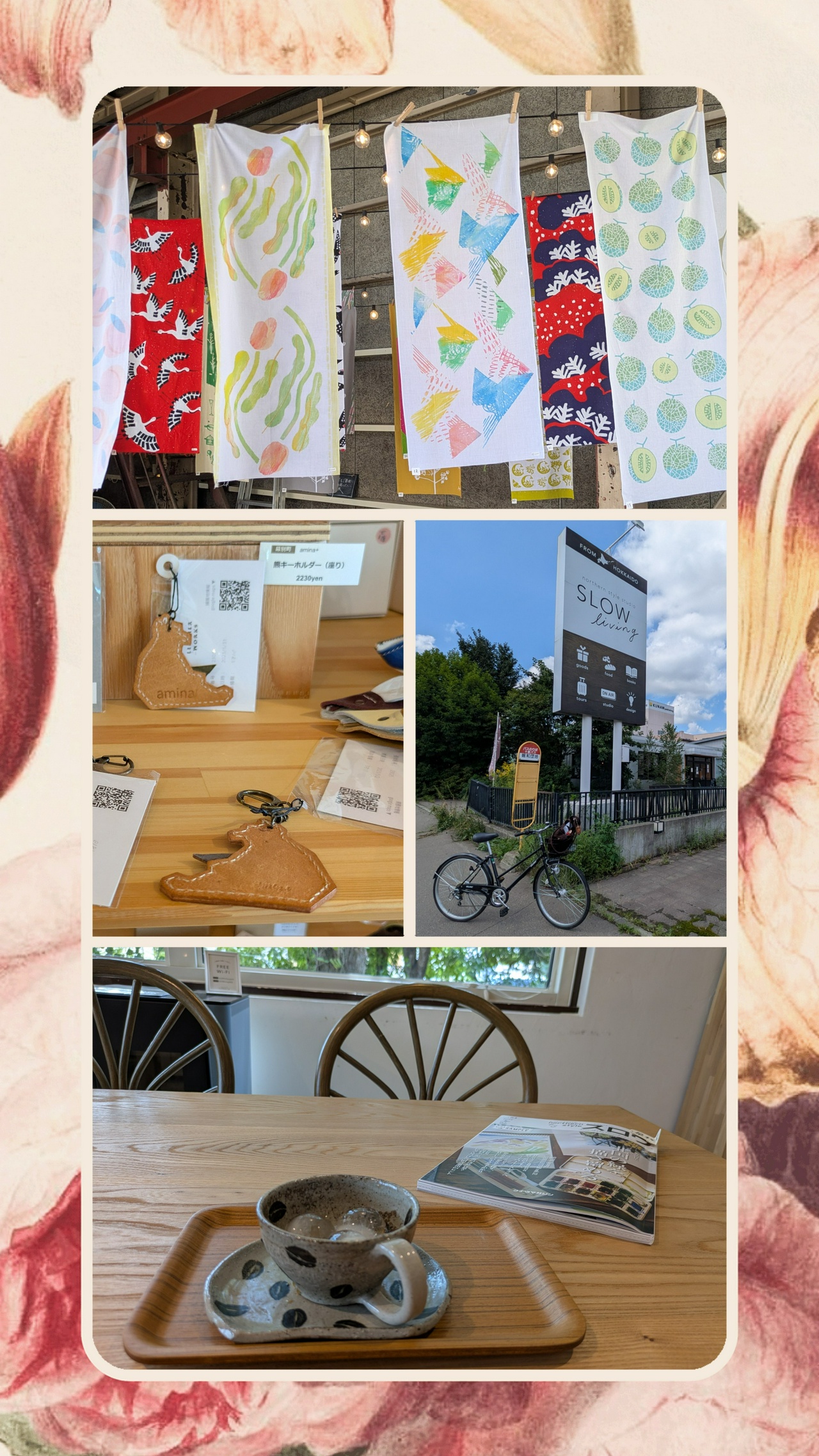
Even before going to the races on my first full day, I went to the Tokachi Farmers Market, which is held in the center of Midorigaoka Park. There I met people selling books, wine, coffee, houses, postcards, and candles, along with vegetables, food, and drinks. I ended up buying some potatoes and pumpkin along with some baked goods from the bakery I had learned about the farmer's market and ate them for lunch on the long bench at the park.

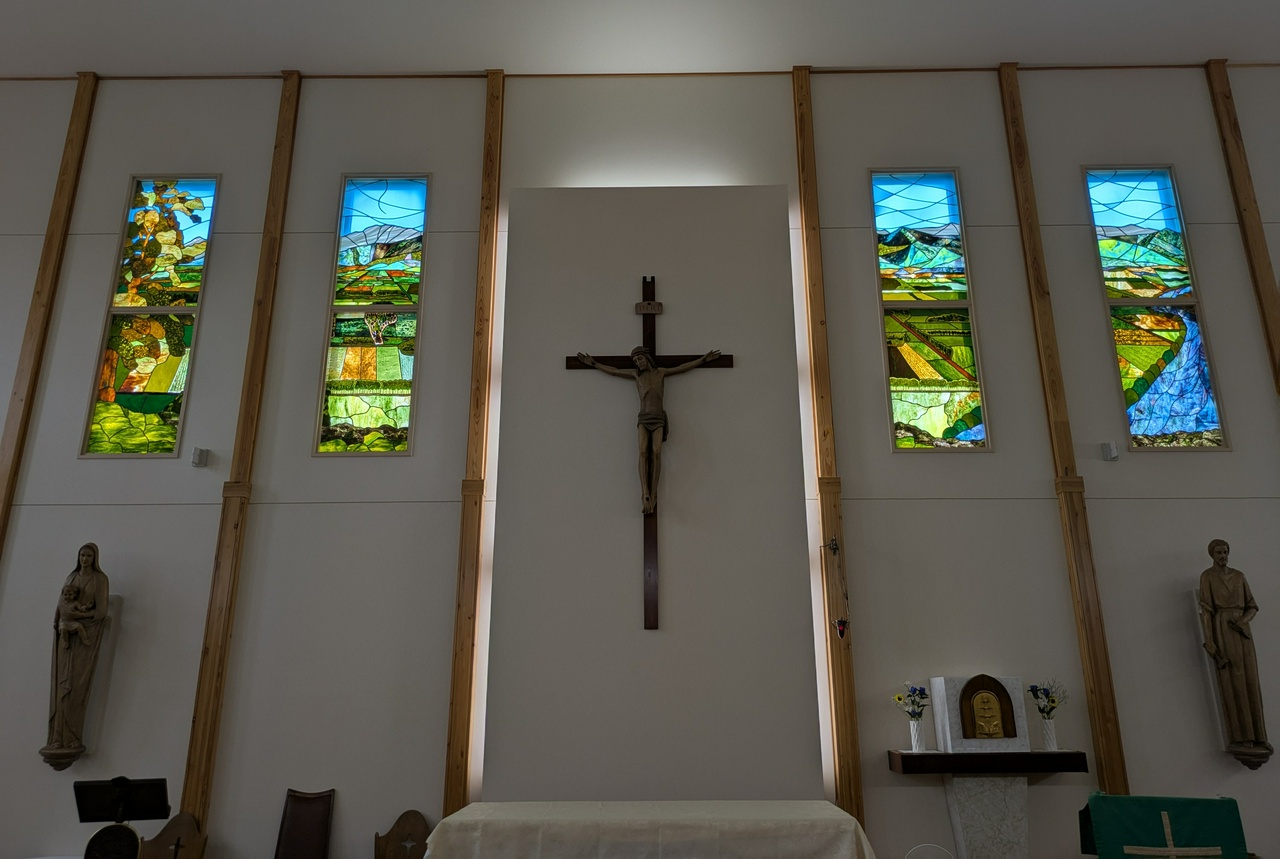
The next day was Sunday, so I went to Mass at the local catholic church. I ended up being in the same pew with the only other visitor at the church that day — the priest had us introduce ourselves to everyone after mass. Everyone was friendly at the post mass coffee and snacks. I was especially impressed by the stained glass behind the altar, which was of the Tokachi Plain. I later learned they were fairly new. I was a bit moved to see how this small church and community expressed their love of God and of where they lived through this form of art and expression.

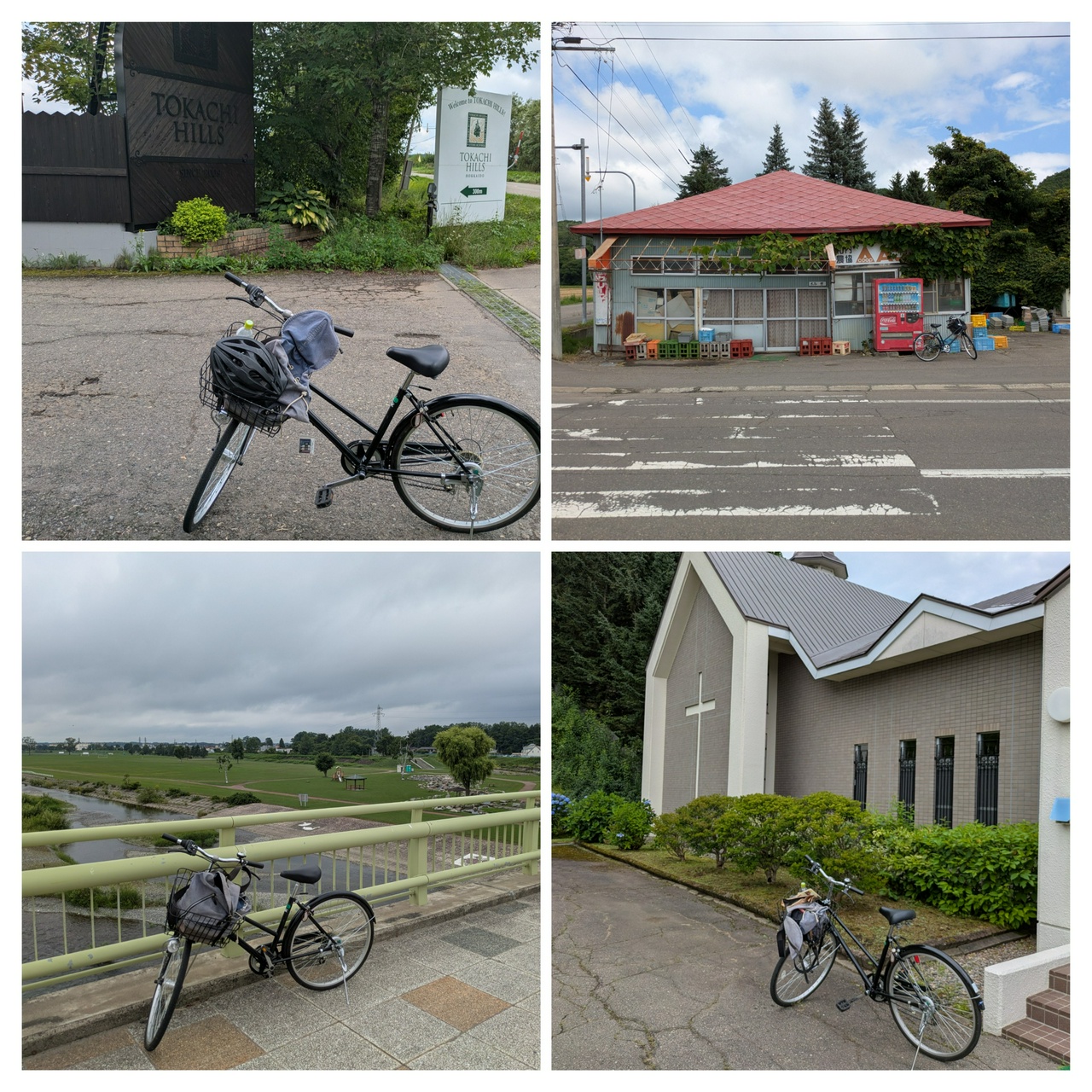
I rented a bicycle in the afternoon and cycled out the 10 or so kilometers out to the Tokachi Hills garden and neighboring Tokaichi Carmelite convent. A few people had told me there was a small hill at the end but it was a bit more than that, so I had to walk up my bike the last kilometer or so. I spent much longer than I expected at the garden and much shorter at the convent but both were impressive and worth the trip.

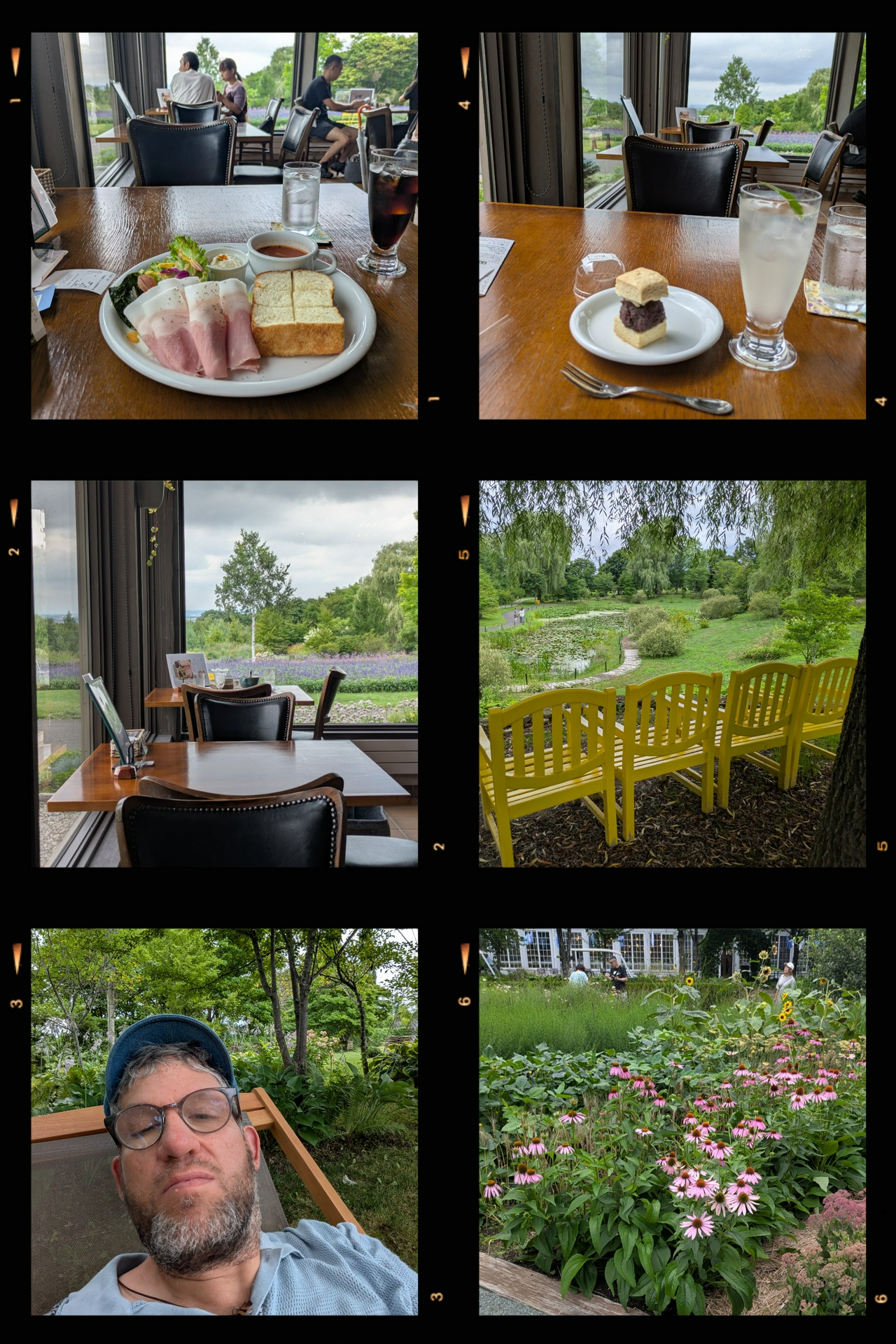
It cost 1000 yen to get into the actual garden but it was well worth it — if I lived nearby 1200 for a yearly pass would be a bargan. I had a nice lunch and dessert overlooking the garden then spent some time walking from chair to chair admiring the garden and views upfront. I am sure I could have spent all day there but I ended up just staying a couple hours.

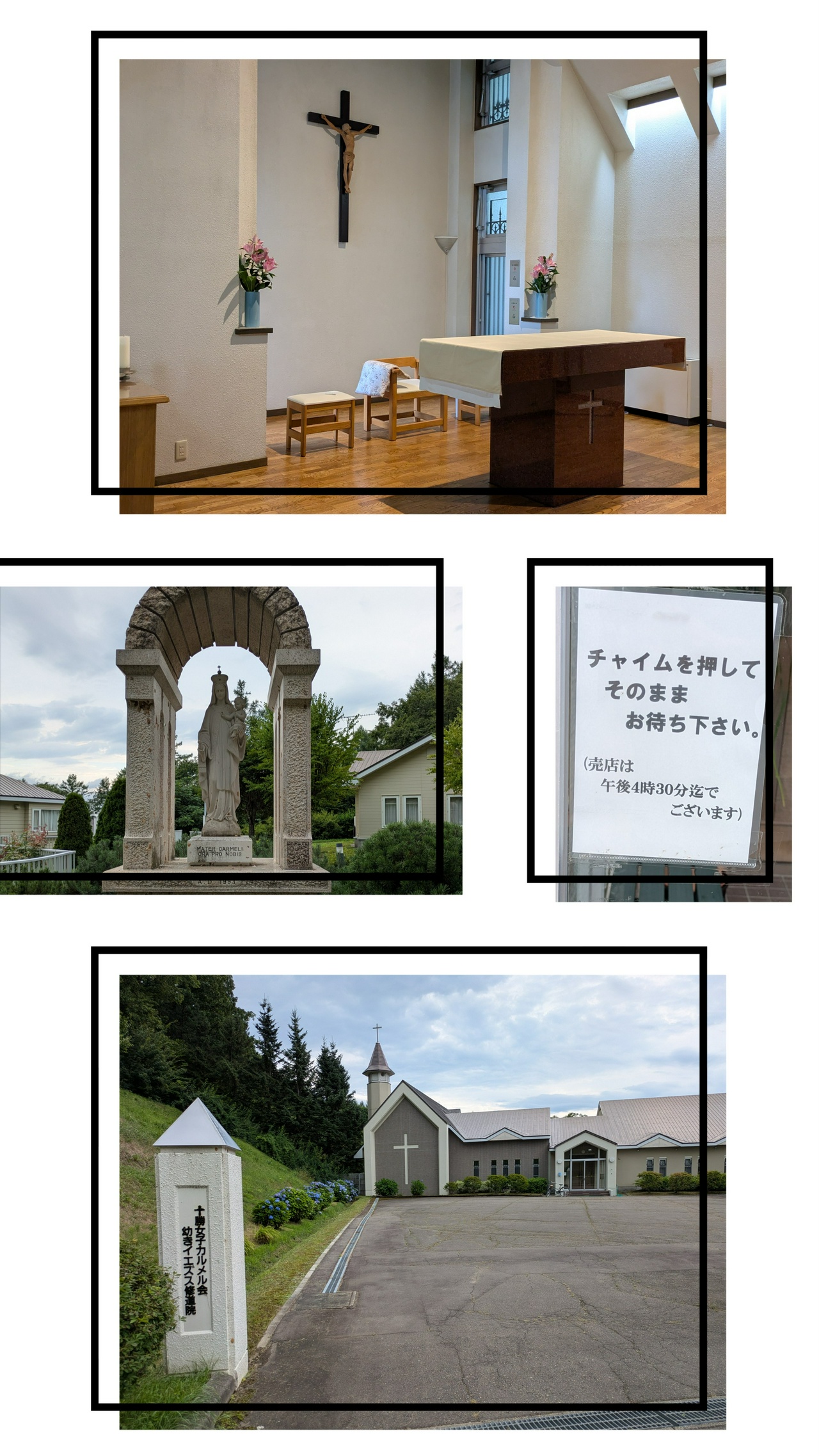
I spent a bit less time at the convent. I had decided to go just after coming while scrolling through google maps. Even the people at the church hadn't been there, though the nun I met said the priest at Obihiro comes out and says the daily 7am mass there. She was very friendly. I had to ring the doorbell to get it and she happily greeted me at the door. She showed me the chappel and we chatted a bit while she sold me some chocolate, bookmarks, and postcards. There isn't much to see — honestly I am glad I discovered Tokachi Hills was next to it as it would have been a long trip to just have visited the convent for 15 minutes — but I hope to get back to go the the morning mass there sometime.

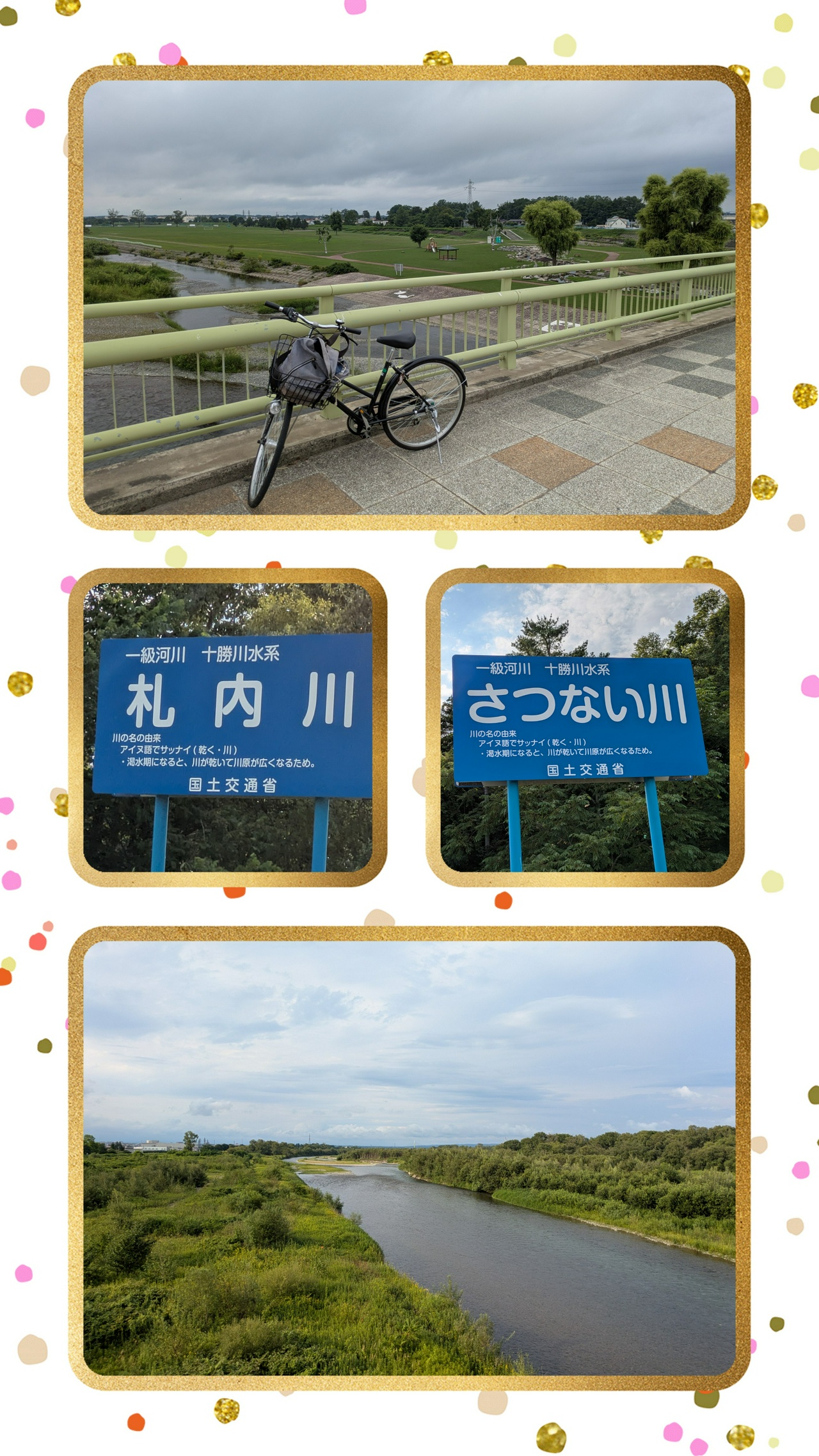
I cycled back down the river back towards the center of town. Many placenames in Hokkaido are dervied from Ainu. Rivers in Japan usually have large signs displaying the river's name. In Hokkaido these signs include the name’s etymology. The river I cycled down, the Satsunai, comes from the Ainu word sat, meaning parched, and nay, meaning river, a name describing its sandy riverbed.

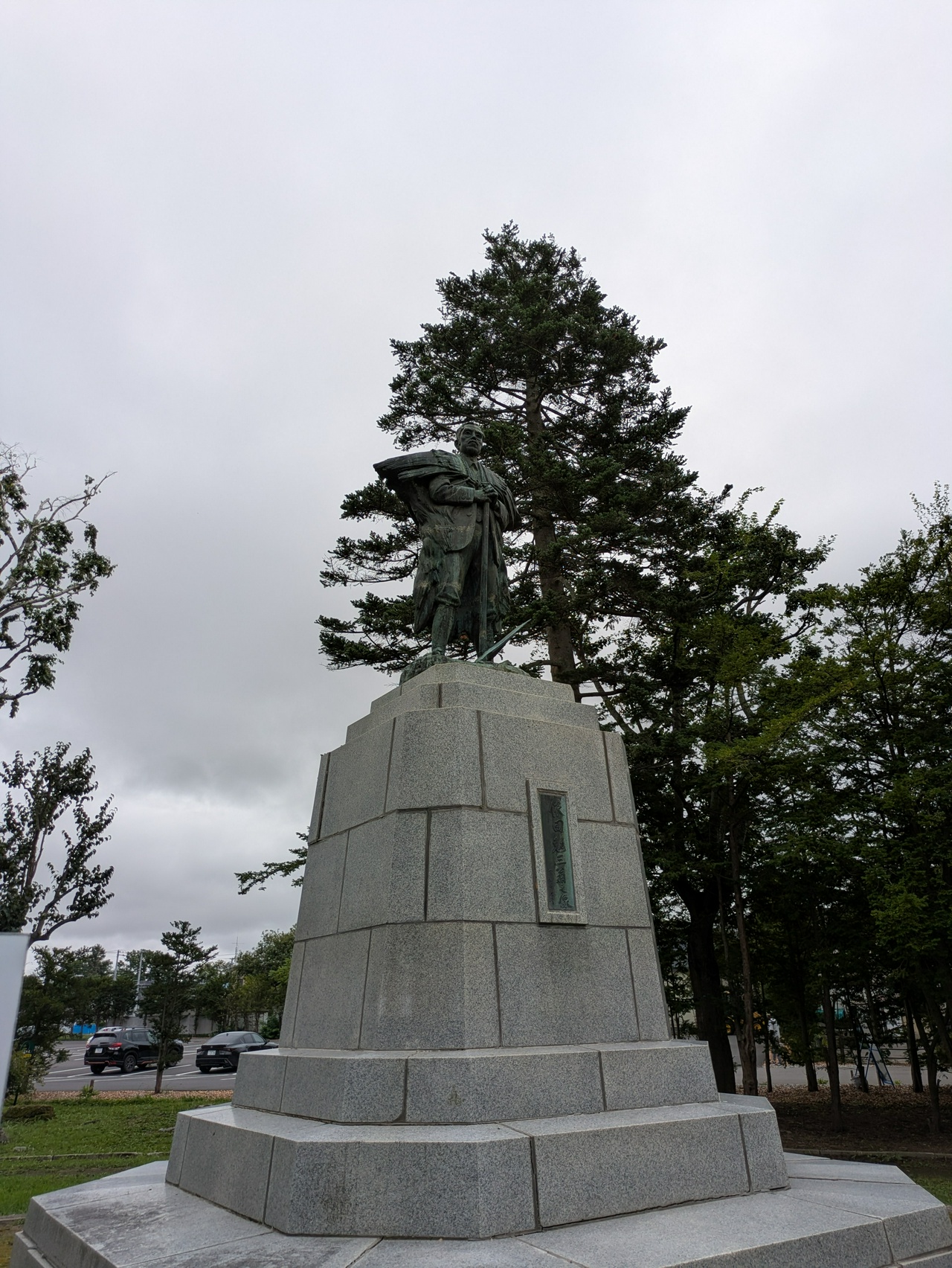
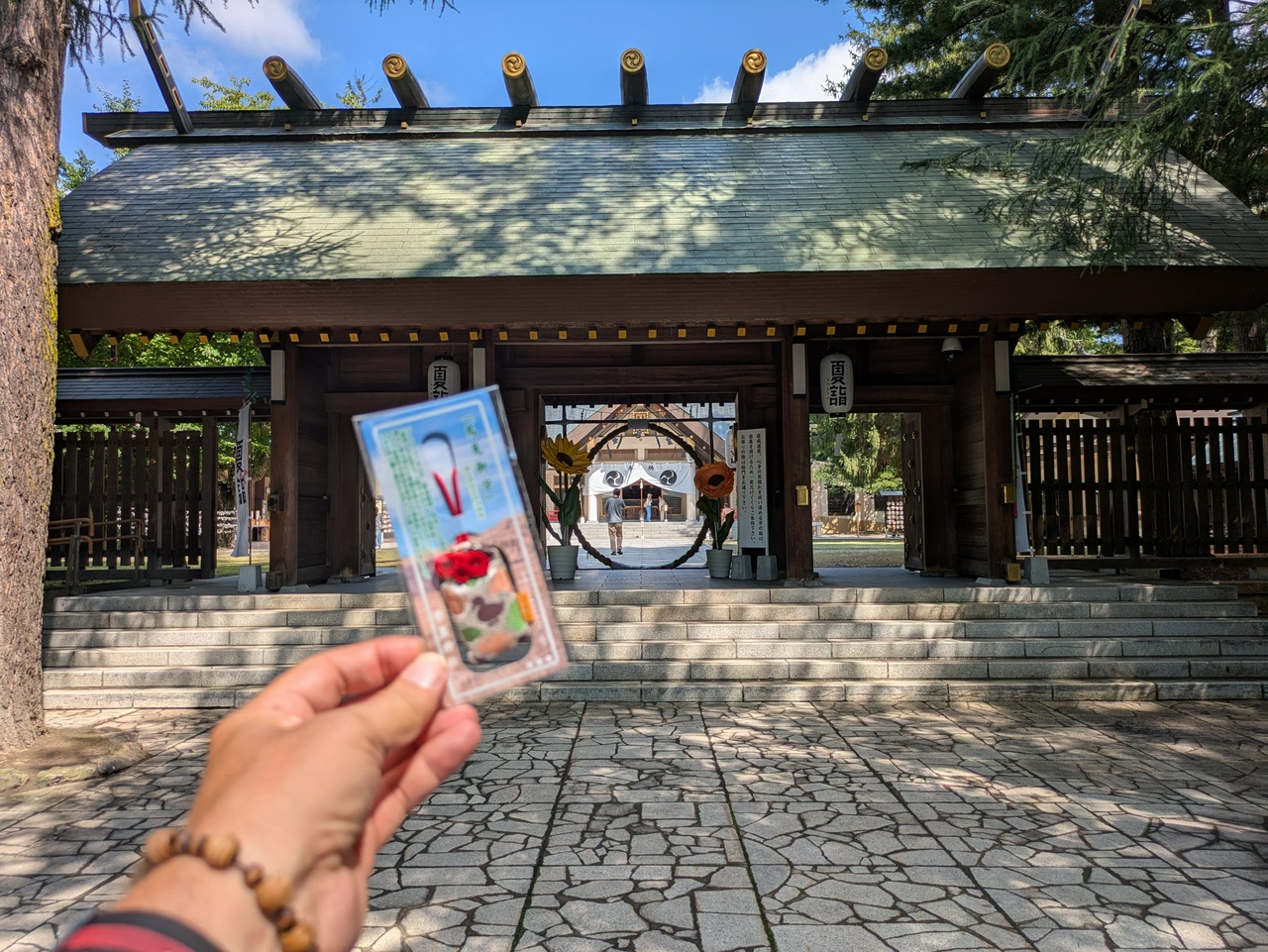
That being said, I still don't know too much about the history of the area. Some Japanese settlers came into the area. During my early morning walk on Saturday I came across a statute of the leader of the first Japaense settlers, Benzo Yoda, at a park across the street from Obihiro Shrine. He led that first group to Obihiro in the 1880s.

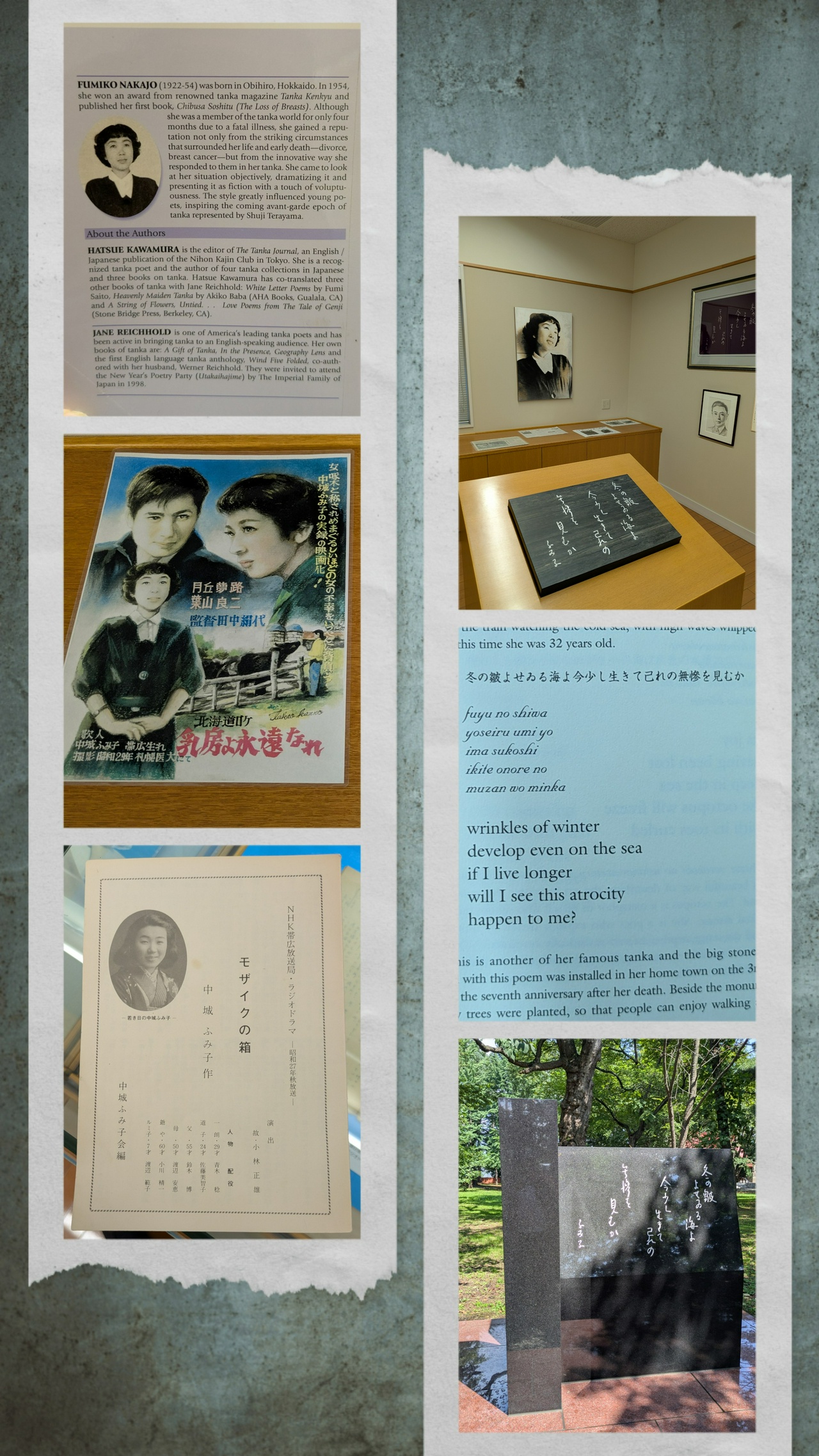
With that lack of knoweldge in mind, I wandered into the Obihiro library on Sunday evening after dropping off my bicycle. In the local history collections area on the second floor I came across a room dedicated to Fumiko Nakajo. She was a tanka poet who lived a full but turbulant life even as she died in her early 30s from cancer in 1954. On Monday